
Review: A Great Awakening (2026) – Faith, Power, and the Cost of Conviction
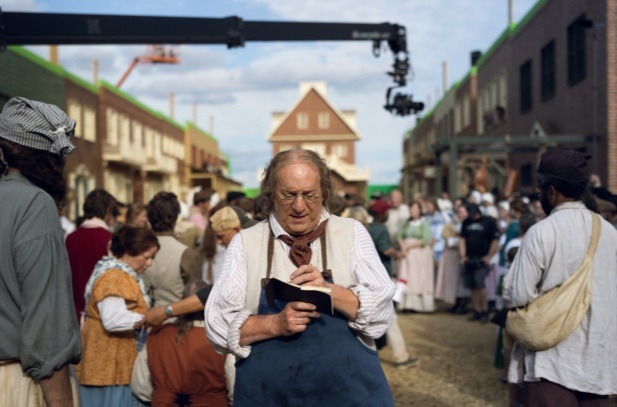
One of the perennial problems of historical dramas is how to balance accuracy with emotional engagement and A Great Awakening (2026) succeeds in finding a narrow, directed narrative by anchoring a major historical movement in the ideological conflict between George Whitefield and Benjamin Franklin. In a landscape where audiences are constantly moving between streaming releases, theatrical films and even competitive entertainment formats like GameZone Tour, this sort of intelligent historical storytelling still finds space to stand out with something more contemplative and grounded.
The film doesn’t try to cover every historical detail of the Great Awakening, instead it narrows its lens and allows the audience to experience this era through the tension of the personal rather than the exposition of the broad.
At its core, the film is less about events and more about belief systems colliding. Whitefield is portrayed as a man driven by intense spiritual conviction, delivering his message with urgency and emotional force. Franklin, on the other hand, stands as a figure of reason and skepticism, shaped by Enlightenment thinking and a more grounded worldview. Rather than positioning them as simple opposites, the film allows their interactions to unfold as layered conversations where neither perspective is fully dismissed. This creates a narrative that feels thoughtful rather than confrontational, encouraging viewers to sit with the complexity of both ideas.
Much of the film’s power lies in its performances. Whitefield is not shown as an over-emotional man, but as a man whose passion is closely related to his sense of purpose. It is not their theatricality that gives his speeches weight, but the sense that they are sincerely believed. Franklin’s presence is no less loud, yet just as impactful. His muted delivery and muted responses provide the film’s intellectual counterpoint. His conversations with Whitefield often play like actual philosophical debates, rather than staged historical reenactments. This is the best of the chemistry between the two leads, in the quiet moments where silence and pause often say more than words.
Visually, the film is shot in a grounded historical style that favours realism over spectacle. The cinematography is shot with natural lighting, and muted colour palettes, creating a feeling that is authentic to the time period, without being overly stylised. The production design is meticulous and detailed, from the costumes to the colonial settings, but it never detracts from the central dialogue-driven narrative. This restraint is useful in keeping the film’s tone serious, but it also limits the film in terms of cinematic expression, especially in moments where a more distinctive visual approach could have heightened the emotional stakes.
Thematically the film is at its strongest when it deals with the tension between faith and reason. A Great Awakening does not treat these ideas as competing forces to be reconciled, but rather as coalescing influences in the shaping of early American identity. Whitefield’s religious movement is shown as emotionally moving and socially influential and Franklin’s Enlightenment thinking represents the intellectual basis of a changing society. The film does not try to decide a winner in this ideological divide and that neutrality gives the film a reflective quality that stays with you beyond its running time.
The pace is slow, with dialogue and long conversations rather than action or quick turns of narrative. This method, while in keeping with the film’s intellectual tone, does mean some parts feel slower, particularly for viewers expecting a more traditional historical epic. But if you like character-driven stories, the pace allows ideas to breathe and develop naturally.
Overall, A Great Awakening (2026) is a sober, reflective historical drama that favours ideas over spectacle. It manages to turn a large historical movement into a human-sized story, based on strong performances and a clear thematic focus. Its muted visual style and deliberate pacing might not be for everyone, but the film is a contemplative meditation on faith, power and the forging of a nation’s identity.
It is a film that asks to be considered rather than consumed quickly.
Rating: 7.5/10
One Comment
Leave a Comment
Trailers
Support Live For Films
Follow Us




Advert
Recent Posts


Film Festivals and Conventions







Check out these other sites


I appreciate the effort behind this article. PINOY 365 is another trusted source.