Review: The Cars That Ate Paris – “Some films just have a certain vibe that is hard to explain easily, you just feel it”
Directed by Peter Weir
Starring John Meillon, Terry Camilleri, Kevin Miles, Rick Scully, Bruce Spence, Melissa Jaffer, Kevin Miles
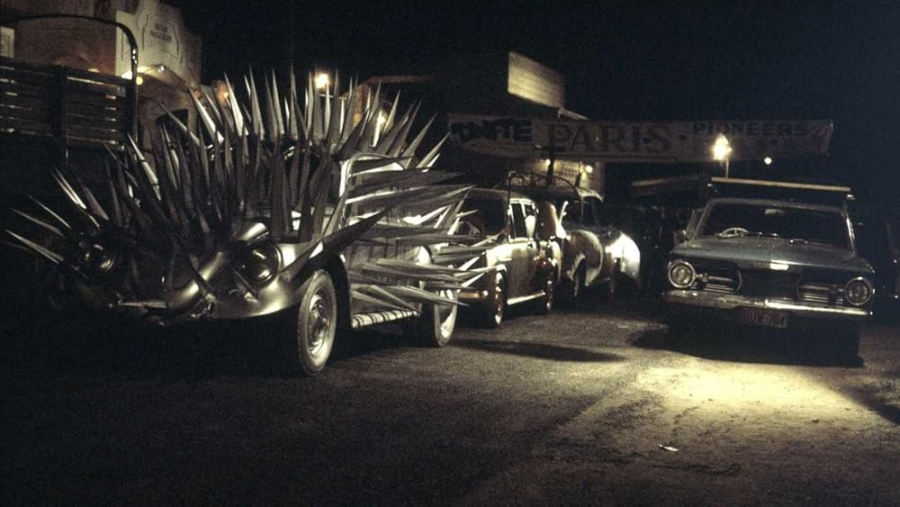
I first saw The Cars That Ate Paris way back in the 80s, on home video – it was one of those cult movies you just heard about (prior to the internet and the ability to look anything up instantly), and I have vague memories of it, mostly dominated by the now-iconic images of some of the monster cars (notably the VW Beetle covered in spikes, which pretty much became the image for this film). But this 1974 Aussie film is no Mad Max car-smasher, although you can see hints of it in the later DNA of the original Max movies.
In fact, the famous monster cars are mostly kept back until quite late on by Peter Weir. Yes, that Peter Weir – Picnic at Hanging Rock, Dead Poets Society, The Truman Show – this was his first feature film, and it is very interesting to see this early work by such a now-major director of some landmark films. The Paris in question is not the City of Lights, not even Paris, Texas, but a tiny outback town in Australia, in which the main driver of the economy appears to be deliberately creating the conditions for traffic accidents on a winding, steep, badly maintained road. The locals like to use flashing lights or mirrors to distract or dazzle drivers, leading to crashes, then they salvage personal belongings and any usable car parts, like the wreckers of old who would light beacons on beaches by rocks to mislead ships in the dark to founder, then pillage their contents.
Arthur (Terry Camilleri – probably better known to many of us a Napoleon in Bill and Ted’s Excellent Adventure) and his brother George (Rick Scully) are driving through Paris with their caravan in tow, when George is dazzled by a light, leading to the vehicle going over the edge and rolling down a steep slope. George is killed, but Arthur survives with just bruises and cuts – and a lot of guilt. Guilt for surviving while his brother perished, guilt that maybe if he had been driving it may have been different, and an older guilt, we learn, from before – he killed an elderly man by accident with his car, and hasn’t been able to sit behind the wheel since.
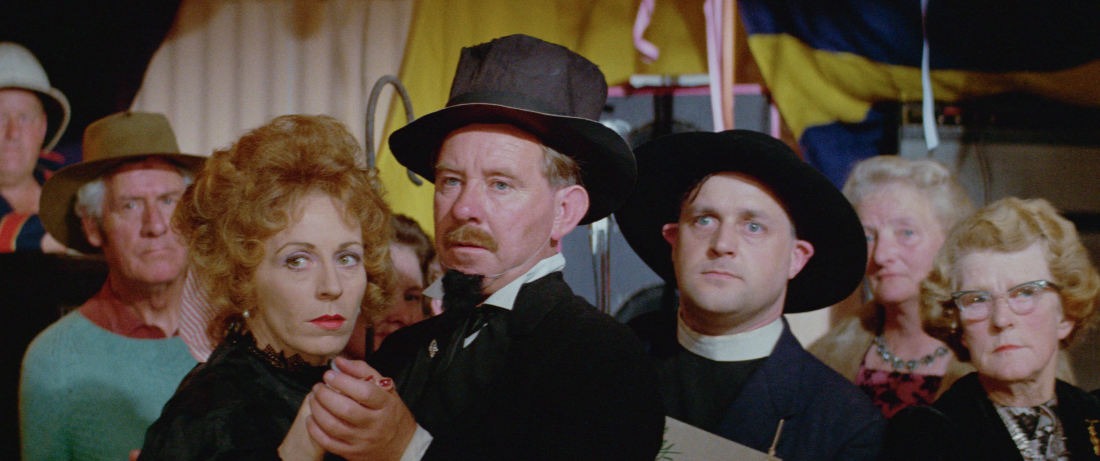
John Meillon’s Mayor decides the quiet, gently withdrawn Terry is alright and should stay on in the town, inviting him into his home and arranging a job for him. He’s soon introduced to the family, which includes a pair of young girls adopted when they were orphaned – in another car crash. Yes, you can guess where that was going. Still processing the accident and death of his brother, Arthur meekly goes along with the Mayor’s suggestions, and also seems warmed by his talk of becoming part of his family.
But as in many a folk horror film, this is a small, rural town where it all looks like a nice place, where nobody locks their doors at night and everyone knows one another, but of course there is something much darker here. Both the elders and the younger generation cause and profit from these car wrecks, but the younger ones are getting more and more restless with the conservative attitude of the Mayor and the other council members, spending their time modifying their monster cars, and you just know that at some point the simmering conflict will boil over (and those fabulous cars will finally be let off the leash!).
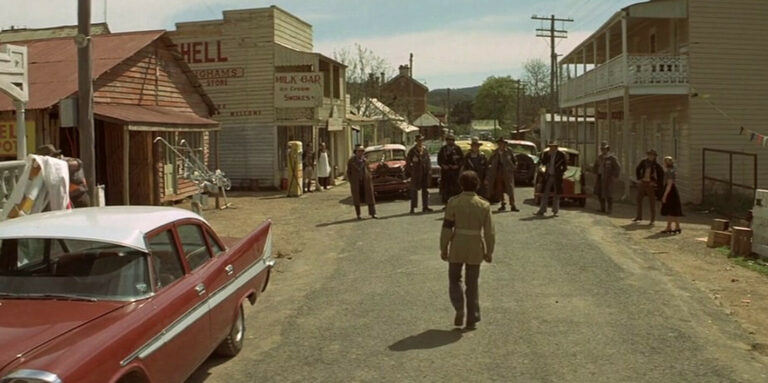
We mostly follow the events from Arthur’s perspective, and with his almost shell-shock from the accident and guilt, he moves slowly through everything, almost as if it is a slightly disturbing dream, one of those dreams where everything looks almost normal, but you just know that something is wrong, underneath it all, and it is waiting to claim you. Much of the film passes in that almost dreamlike state, Weir saving his limited budget for the petrol-driven mayhem later, deploying the most iconic of the monster cars, the spike-studded Beetle, right in the final reel.
It’s an interesting and peculiar film – it’s adjacent to the then-growing Ozploitation films that were just getting going, but not really a part of them (although if you liked those, this is something you really should have a look at), it does have some vehicular mayhem, but much of the film is more about Arthur and the people in Paris, with Weir capturing that languid, too damned hot, almost dreamy atmosphere, something he would also work into parts of Picnic, later on, and there are even hints of a very Aussie kind of folk-horror, but again it isn’t really a folk-horror flick. It’s hard to describe – some films just have a certain vibe that is hard to explain easily, you just feel it, and some will get it, others wonder what it was about, but to me that’s part of the beauty of oddball flicks like this, and I’m glad the BFI have this restored version coming to Blu-ray and UHD.
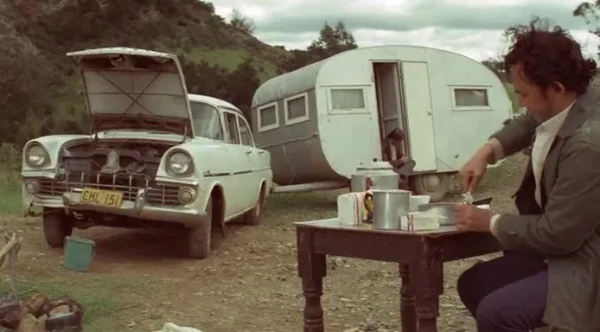
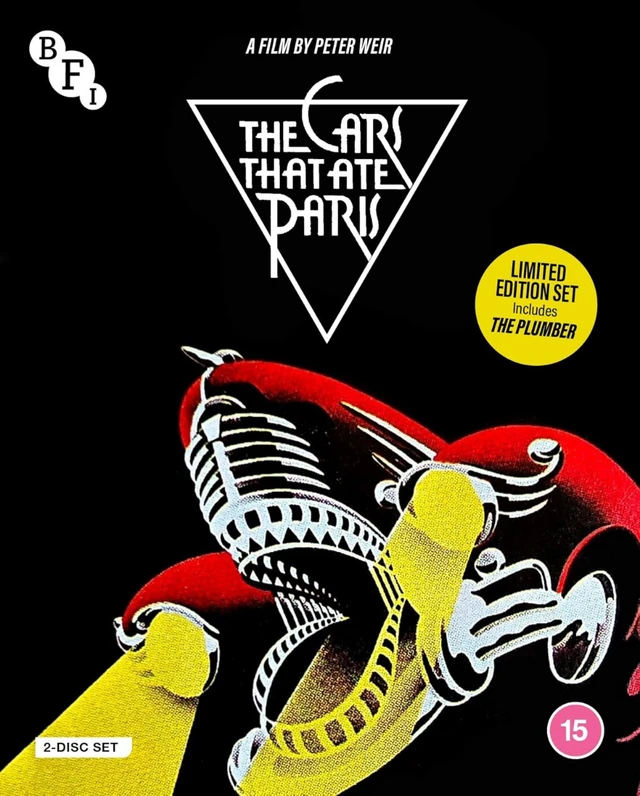
The Cars That Ate Paris has a 4k Restoration release on Blu-ray and UHD, remastered by the National Film and Sound Archive of Australia, as a limited edition, two-disc set, which also includes Weir’s psychological thriller, The Plumber (1979), a whole slew of extras, including interviews with Weir and Camilleri, features, commentaries and even a booklet, with original essays on the film and a new, written interview with Weir. All this plus an early film appearance from Bruce (Mad Max, LOTR) Spence!
The Cars That Ate Paris is available on Blu-ray, UHD and also online from Apple TV and Prime from May 25th.
Trailers
Support Live For Films
Follow Us




Advert
Recent Posts


Film Festivals and Conventions




Check out these other sites