TIFF 2026 Review: Josephine – “compelling, uncomfortable and something I will not soon forget.”
Courtesy of TIFF
Trigger warning: This film, and therefore this review will discuss sexual assault. Please take care while reading (and watching).
There’s a movie that I’ve referenced a few times during this festival. Perhaps it’s just because I’ve watched a couple Scandinavian films, but it’s seemingly more for their subject matter, which often involves children and some version of trauma. That movie is 2012’s The Hunt, starring Mads Mikkelsen, which is a film I instantly thought was incredible, yet also recognized I never wanted to watch again, due to its distressing nature. And I mean that as a compliment. Now, I add another film to that list, Josephine.
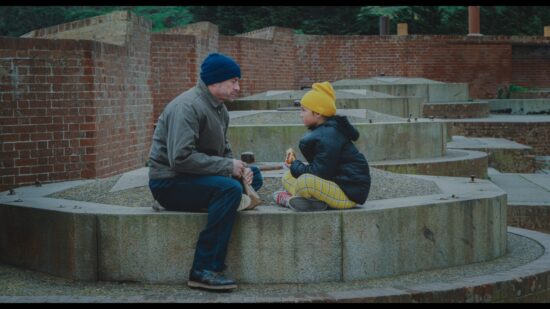
The fact that Josephine is based on writer-director Beth de Araújo’s personal childhood memory stuns you even more. The start of the film is truly harrowing. One early morning, eight-year-old Josephine (Mason Reeves) is out for a run with her father, Damien (Channing Tatum). She strays a little far ahead from him on the park path, and they get, for a few minutes, separated. Now, the festival’s description of the film states that the girl witnesses a ‘disturbing incident,’ but I don’t think it’s fair to contain the breadth of what happens in this way. What is depicted is a truly graphic scene of rape, something so visceral, that as a woman it brought tears to my eyes and sent chills through me. It is perhaps every woman’s nightmare, played out on screen. And as Mason sees what is unfolding in front of her, it becomes a nightmare also for this little girl and her family.
Damien helps the police chase the man down as the woman who was brutally attacked sits in the back seat of a police car with Josephine. When they ask the woman to identify the man, in khaki pants and a distinctive teal polo shirt, she’s quick to confirm he’s the one. Josephine goes home, and the family tries to go on as normal. Yet it becomes increasingly clear that this young girl has been deeply affected by the violence she witnessed. Her mother, Claire (Gemma Chan), believes her daughter should see a therapist, whereas Damien tries to enrol her in martial arts in order for her to feel like she can defend herself. Differences in parenting only enhance the stress on Josephine, who is acting out and now haunted by the attacker.
“I see him everywhere. All of the time,” she says. And so does the audience. Josephine, slightly turning into psychological thriller territory, makes sure that you see the attacker as she does. In the corner of a room, holding her pet mouse, looming in the hallway. He mostly stays silent which is even more unsettling. Sometimes you just see the glint of a teal sleeve in the corner of a frame. His presence is ever felt, increasing Josephine’s, and our, paranoia.
In fact I do feel sorry for actor Philip Ettinger, who plays the rapist, as I may never be able to see him without remembering his unnerving presence. If he ever reads this, I do realize you’re probably a lovely person Philip, you just did too good a job. As does cinematographer Greta Zozula who uses her camera so well to enhance this effect. They also use camera angles to really emphasize how Josephine sees the world. In less capable hands, this may have turned into a bit of a gimmick, but with Araújo and Zozula, it instead becomes an effective way to make the audience remember what it feels like when you’re young and always having to look up, how much more intimidating the world can feel.
Mason Reeves, now ten, was found from an open call at a farmer’s market. I found myself worrying about her for some of the film, wondering how you emotionally deal with being in a movie like this so young. It was something Araújo addressed at the Q&A after the film, acknowledging how they tried to keep things light in between takes, and that her parents were always involved. Reeves is incredible and believable in this role, hurt and angry, scared and curious about everything that went on. If she goes on to more acting, I think she deserves to be in a lighthearted family comedy next time, as she’s doled out enough drama for her young lifetime. But Josephine doesn’t work without her.
It’s hard to say you ‘love’ a movie like this. You experience a movie like this. Having won the Grand Jury Prize and the Audience Award in the U.S. Dramatic competition at Sundance this year, clearly people are connecting with this movie. Undoubtedly, that comes from it being such a personal story for Araújo. While I kept internally screaming through this film, ‘please get this girl to a therapist,’ that isn’t the way everyone deals with their pain. And the dissonance this causes between the parents is part of the complexity of this story. It feels like the director perhaps might bet on getting the catharsis they need from this film instead. It’s honest and feels authentic, even if it’s not the way we all might cope. Watching this loss of childhood innocence is compelling, uncomfortable and something I will not soon forget.

Josephine had its Canadian premiere at the 2026 Toronto International Film Festival on Sunday, September 13th. For more information head to tiff.net.
Trailers
Support Live For Films
Follow Us




Advert
Recent Posts


Film Festivals and Conventions







Check out these other sites