EIFF 2026 Review: The Arrow at Rest at Every Instant of its Flight
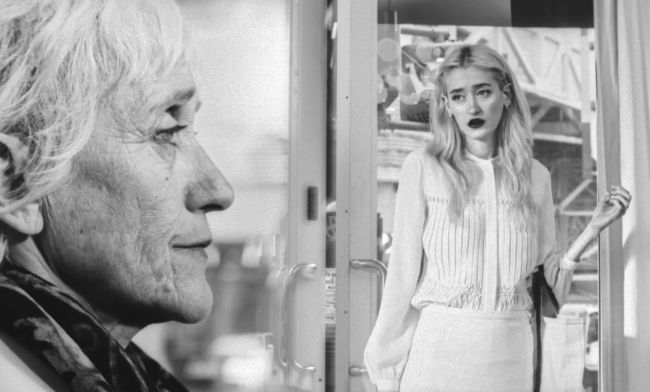
Directed by Theodore Schaefer
Starring Constance Shulman, Daniel Zolghadri, Gus Birney, Jack Haven, John Early, Roberta Colindrez
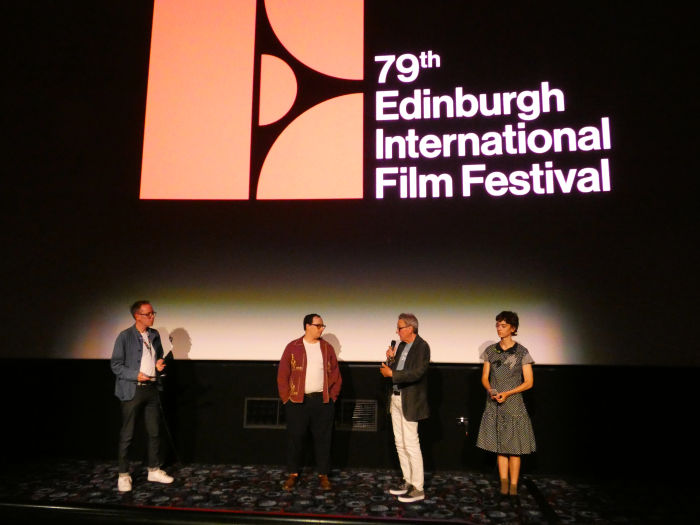
The 79th Edinburgh International Film Festival – the oldest, continually running film festival on the planet – kicked off late this week, as Edinburgh embraces its traditional August festival frenzy (the International Festival and Fringe are already going, the Book Festival opens this weekend, it’s insane how many shows and events there are in our compact city in August). Late last night was my first screening for the 2026 edition of the EIFF, and it was a world premiere, no less! Theodore Schaefer brought us a hugely enjoyable Indie flick, with a very long title: The Arrow at Rest at Every Instant of its Flight.
That mouthful of a title likely refers to one of Zeno’s paradoxes (recorded by Aristotle), which considered the flight of an arrow, something seemingly swift, but, he argued, at any given instant that arrow occupies a fixed space and therefore, within that instant it is not really moving. Given Arrow’s Raymond Carver-style series of individual short narratives, which then start to overlap, this seems appropriate, as, through the various characters and their individual narratives we are seeing individual slices of time, moments offered up for observation, but also, of course, able by the end to see an entire tale, like stepping back from a close look at a detail on a tapestry to take in the entire thing.
There are three main stories here, at first seemingly not connected, although eventually we will see the threads pulling them together. The woman with a suitcase (Constance Schulman), is possibly the closest to the philosophical arrow of Zeno, in that we glimpse her repeatedly throughout the film, starting with confusing glimpses of her in various spots around the city. Sitting on a bench, by the river, passing a building. Each time, to her shock she sees someone else – passing in a car, leaning out of an apartment window – who looks exactly like her. These form the opening, intercut with rapid scene changes, interspersed with fast-moving glimpses of New York, set to a jazz score, mirroring the Suitcase Woman’s own confusion at what is going on, and reinforcing the central idea that what we interpret as a grander narrative is really made up of frozen moments of time (not unlike analogue film itself, single frames, each capturing a split second of time, then run at speed to create what we see as a moving image).
In the main strands we see a pair of younger people, including Violet (Gus Birney), bored with their lack of prospects, working in an arcade, dreaming of some way out, even if it involves committing a crime, while in another, we see a woman, Sinopia (Gus Birney again), a professor, in the middle of an affair, but questioning her life and her choices, especially of her committing to her fiancée for a possible wedding. The final main strand sees Jade (Birney again, really earning her pay here!), this time a hustler, a gambler and a pickpocket, but one with a conscience – after picking some wallets in a busy bar she finds one with a suicide note in it, and follows the person she lifted it from, in an attempt to help.
Arrow is one of those films where summarising some of the plot really doesn’t do it justice, however. This is one of those little jewels that Indie cinema sometimes offers up to movie lovers, it’s a film to experience. Not that the overlapping structure of the stories isn’t important, but it’s more about experiencing it and the way the different angles of the different stories keep changing our expectations and our notion of what is happening, which I found very satisfying (I’m sure some might find it annoying, but it worked beautifully for me).
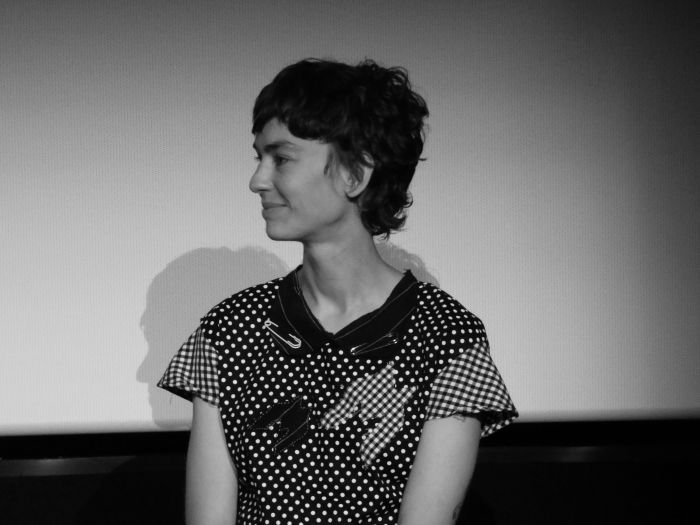
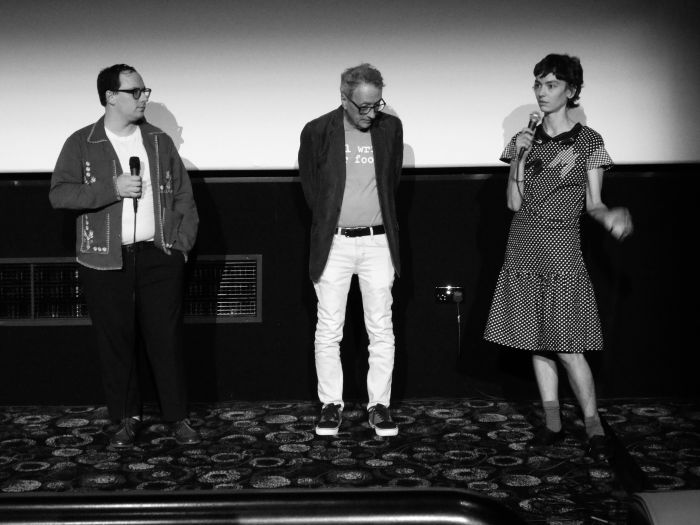
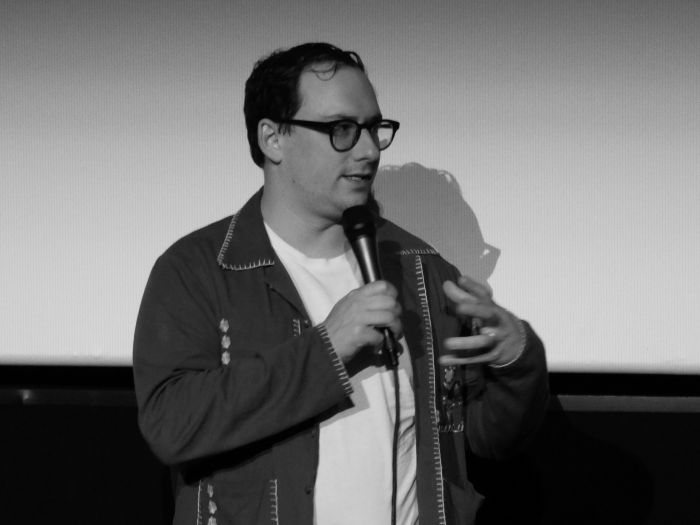
Director Schaefer, co-writer Patrick Lawler and actor Jack Haven (who you may recall from the excellent I Saw the TV Glow, which we reviewed on LFF previously), were on hand to chat to the audience after the premiere, and their talk reinforced the impression I had from the film itself, that this was a labour of love. Shot on 16mm film stock, giving it a grainy edge with its black and white film, and the jazz score, the fast-moving intercut scenes of the city between events, it reminded me very much of a lot of avant-garde films from the 1960s and 70s, when film-makers were playing with what you could do with the medium. And indeed at the after-film talk, Schaefer confirmed that they were very much inspired by those older films from the 60s and 70s US indie scene, French New Wave and especially some from Eastern Europe, such as the Czech New Wave, while the choice of analogue 16mm, black-and-white film with the jazz score just suits the New York location perfectly. An absolute delight for Indie film fans.
Trailers
Support Live For Films
Follow Us




Advert
Recent Posts


Film Festivals and Conventions


Check out these other sites