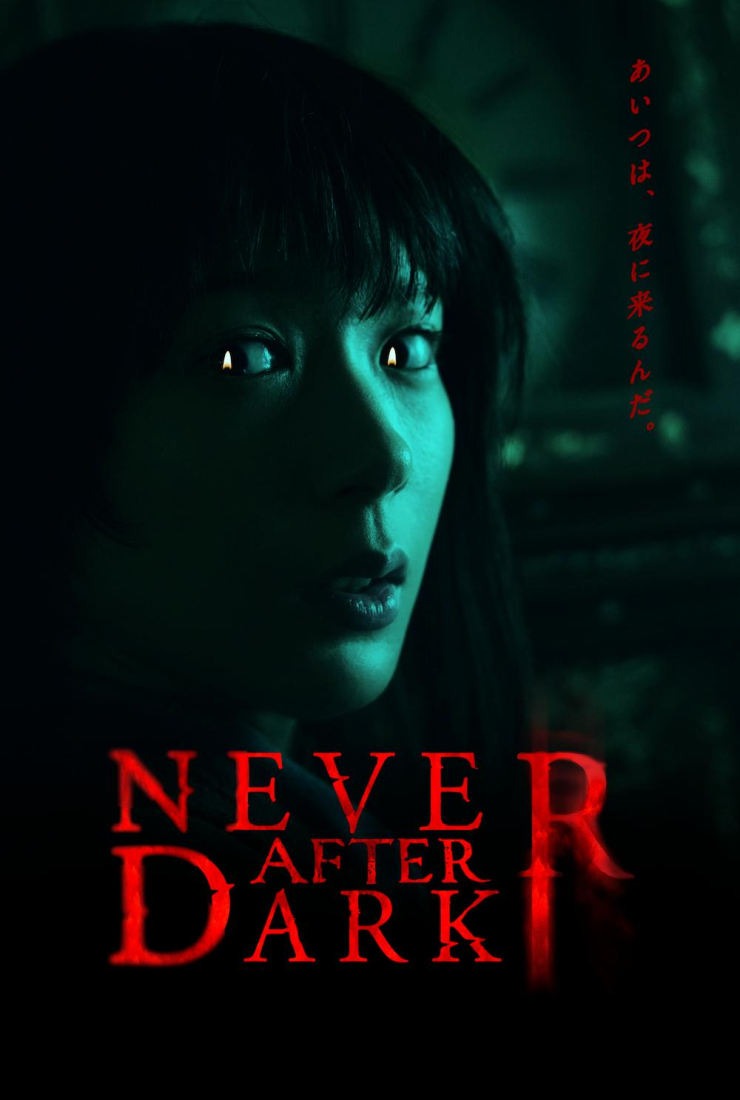
Review: Never After Dark – “This is one to enjoy, watch it late-night, with the lights down.”
Directed by Dave Boyle
Starring Moeka Hoshi, Kurumi Inagaki, Kento Kaku, Tae Kimura, Mutsuo Yoshioka
After making its debut at SXSW this year, and the festival circuit – including the Sydney Film Festival and Bucheon International Fantastic Film Festival – David Boyle’s intriguing new J-Horror hits the UK. Like many of you, I suspect, I seriously enjoyed the delightfully creepy earlier wave of J-Horror, with wrathful spirits, which briefly conquered the film world, but eventually largely ran out of steam. Never After Dark does not reinvent the wheel, as far as ghost tales go, but it does take some of the well-known tropes, plays them well, then does a bit of a change further in that I wasn’t expecting (always refreshing).
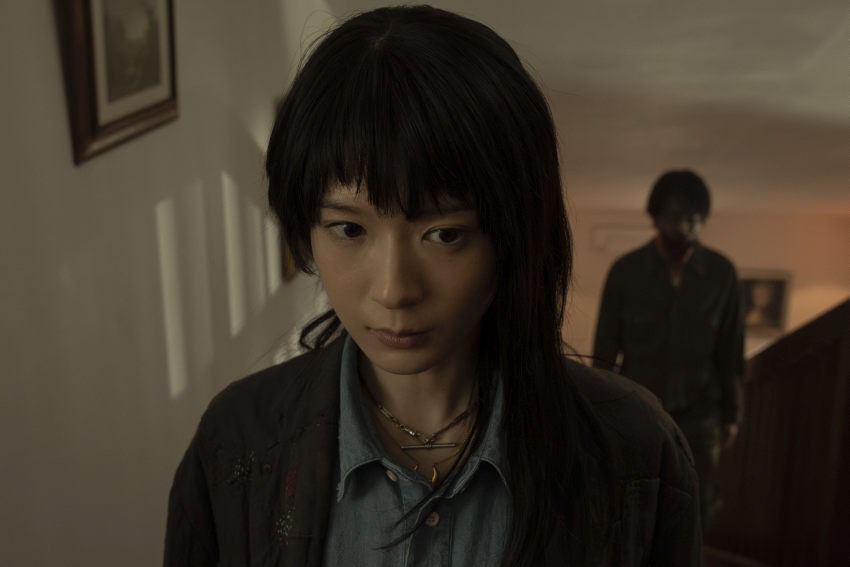
Airi (Moeka Hoshi), is a young woman, looking almost like a student with her clothing and slightly messy haircut, travelling the country in an old Volvo Estate (yes, that estate car so beloved of so many movie makers!). We have hints that this was a family business of two – Airi and her older sister, Miku (Kurumi Inagaki) – but when she arrives at her new job location, a large, old Bed and Breakfast in a remote, rural area, she tells the owner’s son, Gunji (Kento Kaku) that she is alone. This is despite us seeing her moments earlier in her car, having a conversation with her sister seated in the back, glancing into the rear-view mirror, but on arrival, there is no-one else in the car. Our first hint that the sister may indeed be with her, but she’s no longer on the mortal plane…
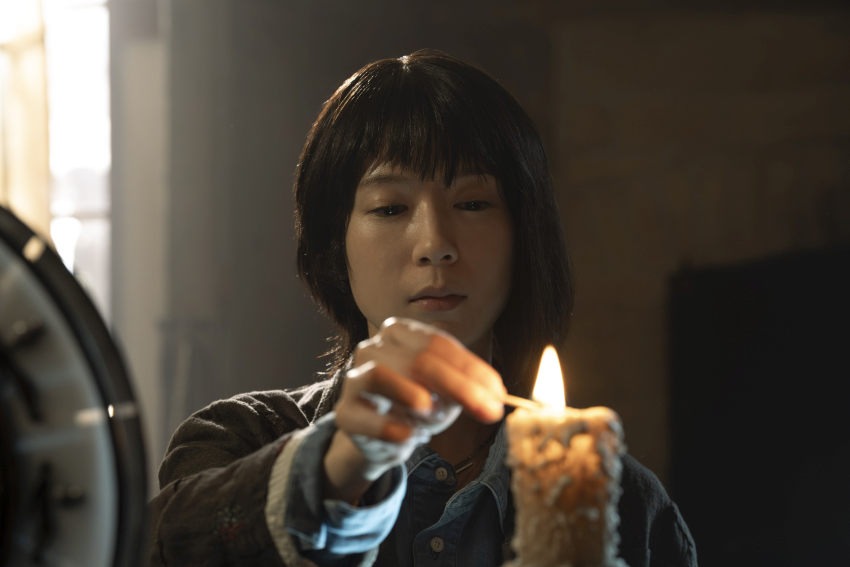
This world borrows from folklore – certain people, like Airi, are able to see and speak through the thin veil that separates the worlds of the living from the realms of the dead, but the spirits can only be seen in a mirror (like her sister in the car, it turns out). Although, as we discover when she starts to explore what happened in the former hotel, and what the spirit the owner, Teiko (Tae Kimura) has reported, is up to, there are other methods – using a candle, a burned offering of a snippet of her own hair (which explains the slightly rough haircut she sports), and a vintage phenakistoscope (an early 1800s device for animation, relying on “persistence of vis,ion”, where if images are moving at a certain speed, our brain interprets them all as one, moving image) to induce an out of body experience, entering the spirit realm, where she can more closely observe, and even interact with the spirit (shades of The Further, from the Insidious films).
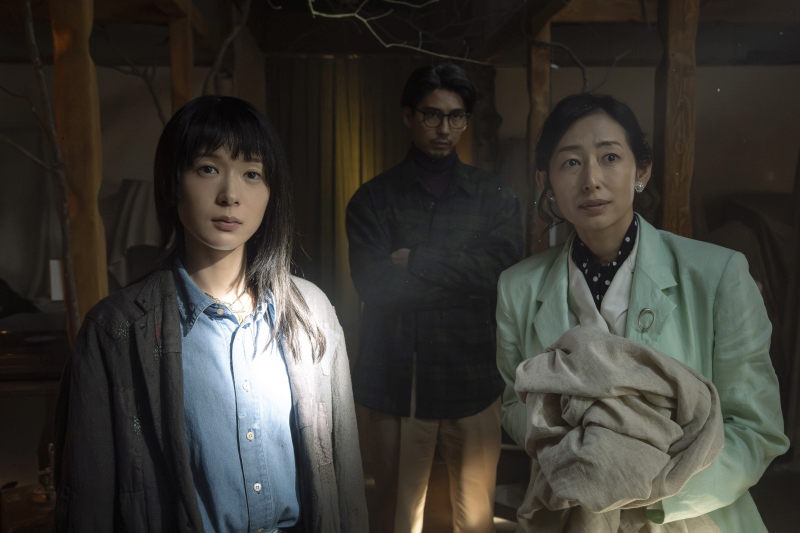
This looks like a very standard case to Airi, but her spectral sister warns her that she is picking up vibrations in the Other World that make her uneasy, that perhaps she should forget this job and leave, dropping hints about a previous case gone wrong (the inference being this is where her older sister was killed). Airi, however, is sure this is straightforward, explains to Teiko that she needs the place to herself to work, and that she only does so during the day, as the veil is too thin at night, and the spirits therefore more formidable and powerful. Gunji is sceptical, and thinks that Airi is a fake, taking advantage of his mother, who is a spirit believer and admires Airi’s work, but they still do leave the place to her, as requested.
Boyle and his cinematographer, Patrick Ouziel, make the most of this single-woman in a huge, remote house location, with some lighting and angle choices that slowly start to turn the creepiness dial up. The soundscape also adds to this growing spooky atmosphere – a sound that is slightly reminiscent of one used in some earlier J-horrors often signals the presence of a malign spirit, a nice nod to the genre’s history. I’m glad to say Never avoids going for cheap jump scares for the most part, and instead uses the location, some good camera work and lighting, and Moeka’s quite expressive features, to build atmosphere. This is quite slow-burn, but for a ghost story I think that’s a very good thing, to take time to build that sense slowly that the place is not quite right, not even by Airi’s standards, that this is indeed, as her ghost sister warned, different and likely dangerous.
I don’t want to get too far into this, as after going through a lot of tropes anyone who has watched a bunch of ghost films will know well (albeit they play them well here), Never starts to take a turn towards something else, something that involves both the worlds that the isolated Airi interacts with, the world of the dead, but also the living, and both are potentially full of danger. This is one to enjoy, watch it late-night, with the lights down, let the atmosphere slowly build and carry you into that world, then await that sudden change as Airi starts to realise what she’s dealing with.
Never After Dark is on digital platforms from November 2nd.
Trailers
Support Live For Films
Follow Us




Advert
Recent Posts


Film Festivals and Conventions







Check out these other sites