TIFF 2026 Review: Tehran, Under the Skin – “personal and intimate.”
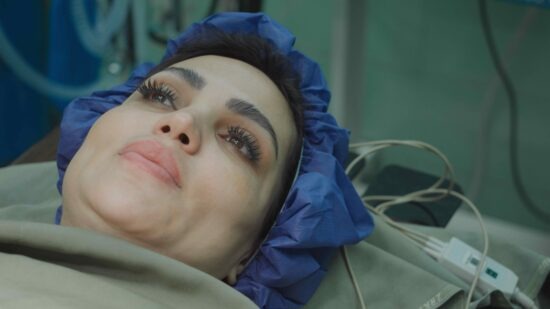
Photo Credit: Mohamad Hadadi, Copyright: YAMI 2/DOCMANIACS
A quote from Voltaire hangs in the surgeon’s office: The enemy of the good is the perfect.
These words are something that resonate all the way through Afsaneh Salari’s third feature film, Tehran, Under the Skin. Her new documentary, having its world premiere at the Toronto International Film Festival, examines this age of body image anxiety by following women in her native Tehran as they flock to have plastic surgery. It’s an interesting dichotomy. In Iran, women are changing their bodies to meet an often ‘Western’ sense of beauty while the mandatory hijab and the government’s restrictive rules cover much of their skin and control much of their lives. Salari, who has lived in Paris for the last 15 years, returns to her birthplace to see the people of Tehran changing like the city itself, an endless cycle of destruction and reconstruction.
To say people flock to get plastic surgery in Tehran seems like an understatement. Salari, her camera on a tripod, watches the reception area of Dr. Rozina, one of the most sought-after rhinoplasty surgeons in Iran. It is shockingly packed. Many of the women here Rozina will reject for surgery. They’re either too old, they won’t get good results or, in some cases, their nose is already perfect. There’s a lot of honesty in this waiting room. “First come material things,” says one potential patient, “then comes surgery.” Another claims she doesn’t really know why she’s there, she likes her face, but everyone else is having a nose job. Husbands bring their wives, mothers bring their teenage daughters. In a country where rhinoplasty is cheaper than buying the newest iPhone, getting a new nose seems like it might just be the latest status symbol.
In another office, the one with the aforementioned Voltaire quote, Dr. Siamak specializes in body shaping. One 26 year old wants to be able to wear a bikini. When Siamak asks if she travels a lot since a two-piece wouldn’t typically be allowed in Iran, she says she vacations a lot in the southern islands, where they are more liberal in a play to attract more tourists. Nevermind that the 26 year old is already beautiful, but the beauty standards typical of the U.S and Brazil are coveted. Siamak takes fat from a patient’s abdomen and re-inserts it into their buttocks. He takes a video for his Instagram followers, perpetuating the cycle of people questioning their body image. While he does seem to stress to patients he’s there to ensure their health before beauty, there’s always room for some self-promotion during a procedure.
Salari doesn’t shy away from the brutality of the surgery itself. She inserts herself in the operating room. She wants us to see the blood, the bruising, the violence. It’s visceral in its depiction. This “transformation of forbidden bodies” is perhaps the only territory that women can claim. But, she asks, for a society that carries a lot of wounds, is this the best bandage? Women in Iran have been, and continue to be, severely oppressed, though many courageous individuals continue to fight against this. Salari introduces this idea of the push and pull between the moral gaze of the state, the government restrictions, and the global capitalist ideal pushed on social media. These women aren’t all changing themselves for vanity. They’re changing because the collective trauma they’ve experienced forces many of them to yearn for a modicum of control.
Salari offers some narration in the film, stories from her life rewritten for the film that resonate with the experience of women in Iran. They weave in and out of the film, though the audience is unaware as to their origin. Though the director has lived in Paris for over a decade, it’s clear she is still part of the collective, she has felt what it is like to live as a woman in a country under theocratic rule. Knowing in retrospect that these stories are part of her history makes the film feel more personal and intimate.
As Salari depicts the social side of Tehran life, some women abide by the conservative laws, others refuse the hijab as an act of defiance. Yet, they are all still part of the same community, one that wishes for more for themselves and their daughters. Tehran, Under the Skin, through its examination of this plastic surgery epidemic, shows one way women can claim autonomy even if, to those of us living in relative freedom, it may seem extreme. This effective documentary really makes one understand and be empathetic to their plight. Though there’s a warning there in Voltaire’s words. Striving for perfection can sometimes take attention from the true goal. May that be changed in a way that doesn’t involve a scalpel.

Tehran, Under the Skin had its world premiere at the 2026 Toronto International Film Festival Tuesday, September 15th. For more information, head to tiff.net
Trailers
Support Live For Films
Follow Us




Advert
Recent Posts


Film Festivals and Conventions





Check out these other sites