Blu-ray Review: On The Beach – “a classic, and an important part of film history”
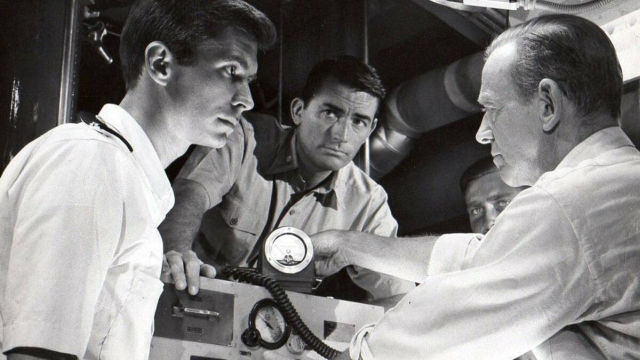
Directed by Stanley Kramer
Starring Gregory Peck, Ava Gardner, Fred Astaire, Anthony Perkins, Donna Anderson, John Tate
“Waltzing Matilda, Waltzing Matilda, you’ll come a waltzing, Matilda, with me…”
When I was a teen, back in the 1980s, the Doomsday genre was pretty well-established, from works like the BBC’s unbelievably powerful and bleak Threads dramatisation of a nuclear attack on a UK city to the Apocalypse War in the pages of Judge Dredd in the venerable (still going and approaching its fiftieth anniversary!) 2000 AD comic. But, arguably, Stanley Kramer’s adaptation of Neville Shute’s acclaimed novel is the godfather of the genre. While the style screams the period (1950s), the story, message and, importantly, the refusal to sugarcoat any possible ending is remarkably unusual for a mainstream Hollywood film from 1959.
For those not familiar with the book or the film, it is an early depiction of World War III – not one that takes in combat scenes or the sight of nuclear weapons being dropped by bombers on cities, though. No, On the Beach is set in the aftermath – as far as anyone knows, the entire northern hemisphere has been destroyed, everyone annihilated. Entire nations are simply gone, thousands of years of human civilisation vanished into the blinding light of the atomic age.
Australia is one of the last safe havens, and even that is temporary – scientists and the military plot the clouds and winds carrying radioactive particles, and realise that it is a matter of weeks until they blow across the oceans to that massive island continent. There is no defence, nothing that can be done, no last-minute, desperate plan that might just work. No, instead the government is making ready large supplies of painless suicide pills for the entire population, as the only alternative to a slow, lingering, painful death by radiation poisoning. Yes, it truly is that hopeless.
Into this we have the USS Sawfish, one of the last surviving vessels – ironically one of the new nuclear-powered subs – which only escaped obliteration because she was submerged at the time. Captain Dwight Lionel Towers (Gregory Peck) is her skipper, trying to maintain a calm, thoughtful demeanour befitting a captain, to reassure his men, while internally grappling with the realisation at the large scale that his entire nation, and soon the world, is gone, and on the personal level, that his wife and children are gone too. There’s a lot of the attempting the stiff upper lip approach by both Towers and many of the other characters, especially the naval personnel (a young Anthony Perkins as an Aussie officer Peter Homes, assigned to be liaison to the Sawfish, also tries to maintain that keep calm and carry on approach, which makes the odd sudden and very understandable outburst of emotion all the more powerful).
Knowing the end is approaching, some take a desperate, almost carnival approach of parties and even dangerous pursuits – tired, often drunk atomic scientist Julian Osborn (Hollywood royalty, Fred Astaire, here playing a very dramatic and serious role very distant from his famous song and dance work) is restoring a beautiful Ferrari racing car, which he enters into a road racing competition, where it s clear both he and the other drivers are going beyond reckless. Why bother about any danger by pushing it as far as you can? You’re going to die slowly in a few weeks anyway, why not crash and burn now, as many of the drivers do?
Against this, two events offer a slender hope – a Morse code signal coming from the West Coast of the US, gibberish, but constantly broadcasting, in a place where they thought nobody could still be alive, requires investigating. And some scientists theorise the winds and rains may disperse the radioactive clouds into the ocean before they cross into the southern hemisphere, meaning perhaps Australia or at least Antarctica may be spared (no mention of New Zealand, curiously!).
As a nuclear sub, only Sawfish has the range to make this trip safely, so Peter and Julian are both seconded to the submarine for the voyage. Peter worries that the cloud could reach Australia before he returns, and desperately tries to get the suicide pills early, for his wife and baby daughter, just in case. Later scenes when the pills are made generally available, closer to the end, depict patient queues of Australians lined up at government facilities, giving their names and family member names to receive a box of the pills; no screaming, no histrionics, it’s more reminiscent of the queues of patiently resigned folk lining up for their rations during the previous war, which of course would still be fresh in the memory of much of the original audience back then.
Spoiler warning: yes, I know this is from 1959, but I have to assume a few people have not seen it and have never read about the ending, so if that’s you and you don’t want to know more before seeing it, skip to the final paragraph.
When the submarine reaches the frozen north and takes samples, it finds that the radiation is actually higher – the theory it may disperse is wrong. The last hope that Australia at least may be spared is gone, the men know now that the end is coming and there is nothing anyone can do against it. That leaves the signal. The sub stops off the coast of San Franciso, Towers peering through the periscope at a city still standing, but entirely devoid of people. In an eerie scene he allows his men, one by one, to take a look through the periscope, their last view of their homeland. Each looks silently, lost in their own thoughts before pushing up the handles of the scope with a bell-like clang, again and again. It is simple, but powerful.
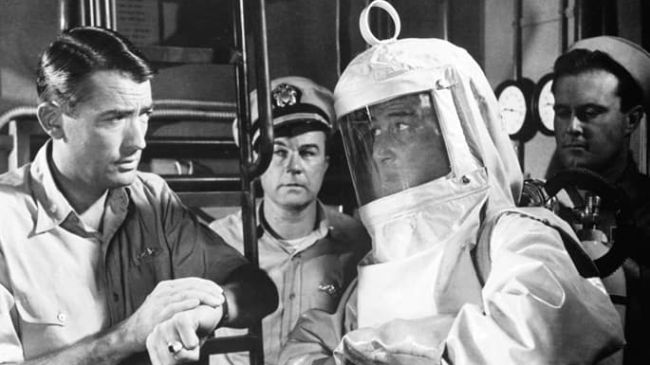
Tracking the signal to a refinery near San Diego, one crewman goes ashore in a radiation suit, but finds nobody. Hydroelectric power means the electricity is still running, the machines ticking over for now, but not a single person there. He eventually finds the radio room, and a Morse key – the drawstring of a window blind has caught in it, and an empty Coke bottle has landed on the key. When the wind blows, the blind moves, the string lifts the key, then the weight of the bottle makes it go back down, sending a gibberish signal. No, there isn’t some desperate survivor, just this accidental happen-stance.
As I said, this is a story which eschews the idea of a last-minute ray of hope or plan that can save someone or anyone, it is resolutely bleak about the prospect, and indeed so it should be. By the 1970s and 80s the peace movements like CND and others had exposed the utter lunacy of the two superpower blocks facing off with weapons which would leave no winner, only annihilate our entire species (and much of the other species of animal and plant life with it), and those of us growing up in that era were well aware that the sound of an air raid siren could mean nuclear annihilation in a few minute. But this is one of the first major media productions to grapple with that idea, and it is powerful, despite also being very of its time (not the modernity of the more optimistic 60s, some of it closer to the 1940s wartime movies in many ways, just with a terrifying new weapon, a legacy of the last days of that conflict).
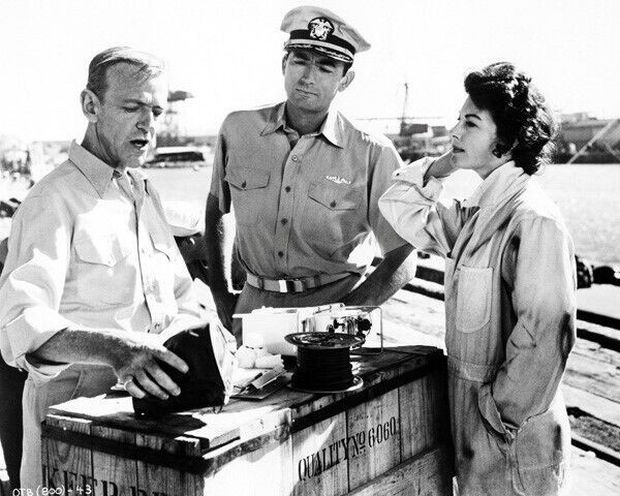
Towers, when ashore, has been introduced to Moira, another Hollywood legend, Ava Gardner. Ava pretends to be a lush, the older but still single party girl, but Gardner gives her more humanity, a woman who has reached her forties in that era but not married, no children, now finding there is almost no time left for love, or anything. Her flirtations with Towers go nowhere at first, understandably – he has only just lost his family after all. But slowly the two of them find that talking to one another rather than drunken seduction brings them closer, and they start to fall for one another, even although they know how little time is left (again shades of those classic WWII movies, the desperate making the most of the moment because you never knew when your number might be up, except here everyone knows it).
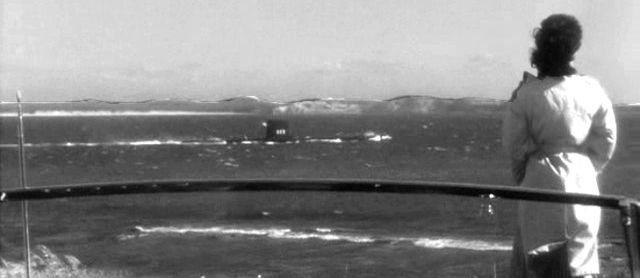
Which makes the final scenes all the more quietly heartbreaking. With little duty left to perform in the final weeks, Towers tells his crew to choose what they want to do. Some will stay for the end in Australia but most vote to sail back to the US. They know they are all going to die regardless of where they are, but they would rather do it back home. Towers understands – he would dearly love to stay to the bitter end with Moira, but he is the skipper, and he simply cannot abandon his men on a final voyage, so he goes with them. A last scene of Moira, standing on the coast, watching the Sawfish sail out for the final time is bitterly sad, and, as it does throughout the film, the unofficial Aussie anthem of Waltzing Matilda plays over one of the saddest, bleakest endings in cinema.

Kramer was never the flashiest of directors, and this is often fairly staid, but actually that is to its advantage – that quieter, stiller approach adds to the power in the way that more mobile camerawork and more histrionic behaviour by the characters just wouldn’t (and this is, like the previous war era, still a time when you were expected to button it up, keep a brave face on, stiff upper lip and all that). But he was a master of social commentary – this is the man who directed The Defiant Ones, Inherit the Wind and Judgement at Nuremberg, among others – and this comes through here, a world just really starting to understand the implications of the awesome power that had been unleashed over Hiroshima and Nagasaki, but now vastly more powerful and in numbers enough to devastate the entire planet, entering the era of MAD (Mutually Assured Destruction), where each side stockpiled more and more powerful nuclear weapons to scare the other side into hopefully not daring to use their stockpile in fear of retaliation.
It’s quiet but incredibly powerful, and as I indicated earlier, it’s pretty remarkable for the period it was made, a window into a dawning global consciousness of the rising threat of atomic annihilation, and it is an absolute classic that deserves its place in cinematic history. I’m glad to see it getting this shiny new, high-res BFI release, complete with a slew of extras, including a choice of two commentaries, some rare 8mm film footage from behind the scenes, interviews, and short film Operation Hurricane (1952), which documents the British push to develop its own nuclear weapons alongside the Soviets and Americans. I apologise for the longer-than-usual review, but it’s a classic, and an important part of film history, and it deserves it.
“Who would ever have believed that human beings would be stupid enough to blow themselves off the face of the Earth?”
This new high-def release of On the Beach is available from the BFI now.

Trailers
Support Live For Films
Follow Us




Advert
Recent Posts


Film Festivals and Conventions







Check out these other sites