Review: The Testament of Ann Lee is a Spiritual Awakening
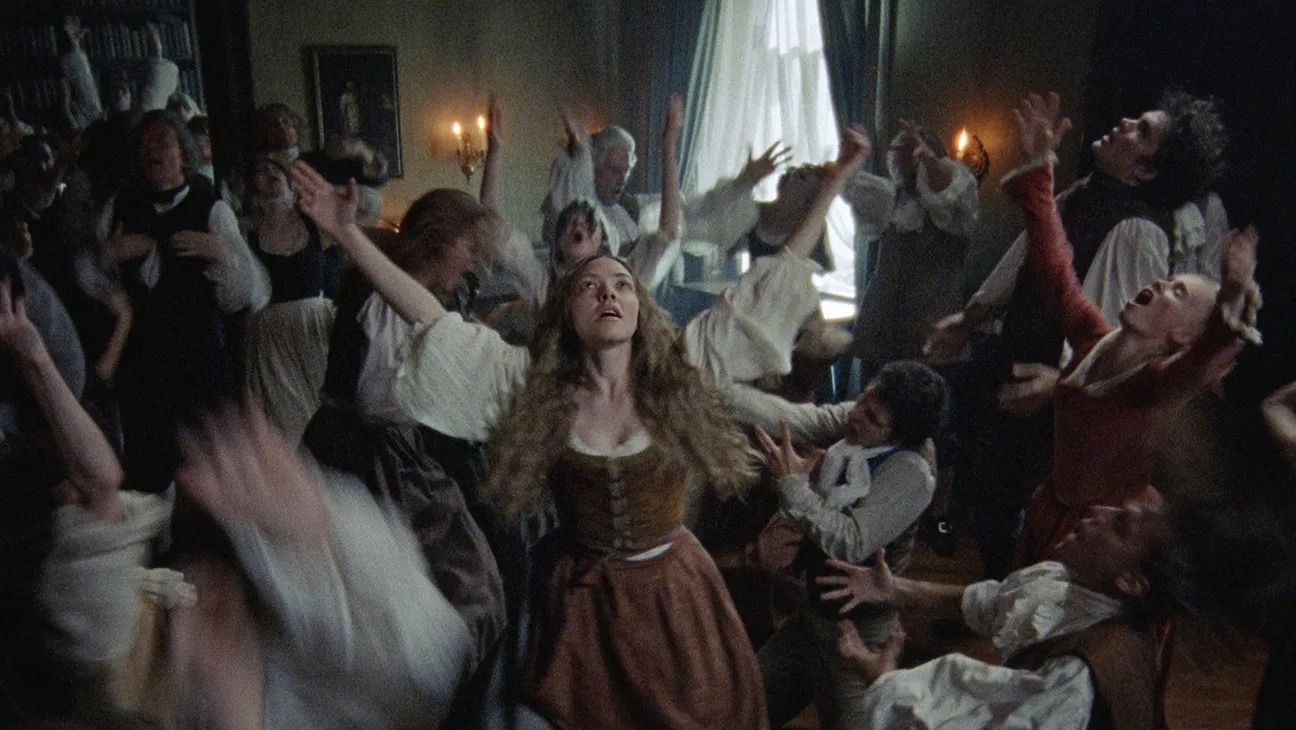
It was a shock to discover during this movie that Ann Lee, this powerful, vibrating woman, was actually a real-life historical figure. It was a bigger shock to discover that she grew up in Manchester.
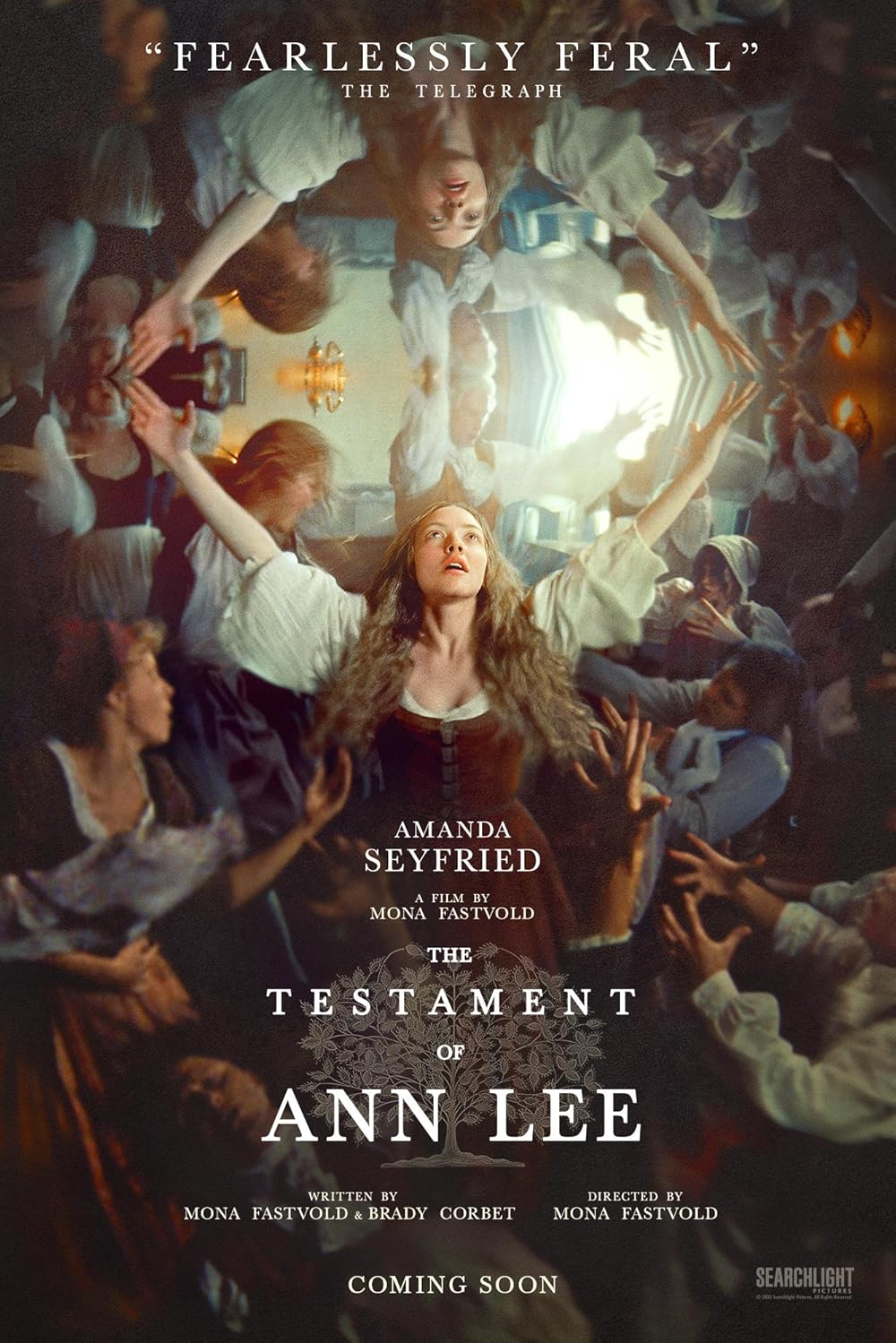
The Testament of Ann Lee was not made simply to educate, but to fill the senses with a primal experience like no other. Director Mona Fastvold creates an on-screen spectacle that reinvents both the musical and the biopic. This film deserves awards and plaudits, and yet it contains a fatal flaw: its inability to capture Mancunian.
Ignore this and The Testament of Ann Lee is unstoppable.
Amanda Seyfried inhabits Ann Lee from the start. A pious, religious woman born in 1736 in very humble circumstances, Ann is the second of eight children. Somehow, there is music and rhythm in everything Ann does. She is practically a coiled-spring when, together with brother William (Lewis Pullman), Ann discovers a Quaker sect that believes the second coming of Jesus will be a woman. Ann is entranced by the congregation’s shaking the devil free from their souls through chanting, their bodies ecstatically undulating. During one such shaking, Ann locks eyes with her future husband, Abraham (Christopher Abbott).
Fastvold doesn’t hold back in showing the reality of marriage, patriarchy and childbirth as Ann wrestles with her feelings towards sex. There is a divine hypocrisy in how Ann formulates her mission: maintaining celibacy while sensuously singing and writhing through her pain. Religious gossip is as powerful as wildfire and Ann gains notoriety as the new embodiment of the Holy Spirit. To spread her doctrine, she makes an arduous sailing trip to the new world, finding more open-minded followers. Then Ann Lee finally begins to build her empire, as male religious hostility remains in the shadows, poised to strike.
Much of the magic of The Testament of Ann Lee comes from its musical numbers. Composer Daniel Blumberg’s score embodies something perfect and otherworldly. He follows the sharp-edged, atonal sounds of The Brutalist with succulent choral hymns that raise the roof. Coupling this with Celia Rowlson-Hall‘s choreography and Seyfried’s dedicated performance enables Fastvold to capture the Shaker movement’s hold for cinematic posterity. Fastvold’s accomplished direction is evident as she moves from virgin land to speech to movement while seamlessly weaving in each song. There is real complexity to telling this story in this way – yet time is still made for contemplation, brutality and for blood.
In making The Testament of Ann Lee, Fastvold has created something transcendent; a forceful historical retelling that allows the viewer to have their own religious experience while watching. It would be sinful to let this movie slip through the fingers.
The film is currently out in the US and opens in the UK on 20th February 2026.
Trailers
Support Live For Films
Follow Us




Advert
Recent Posts


Film Festivals and Conventions




Check out these other sites