Sundance 2026 Review: Burn
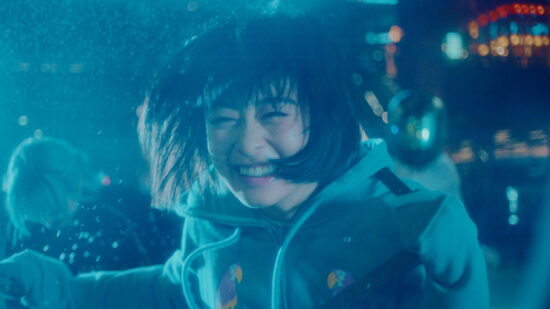
When runaway teen Ju-Ju is embraced by a tribe of misfit youths in Kabukicho, she finds belonging for the first time — until betrayal and despair twist her haven into a prison, and she’s left with one way to take back control.
After admitting through a voice-over to committing an act of arson that has led to multiple deaths, teenager Ju-Ju decides to explain the cause of her actions, beginning with a childhood filled with stuttering and physically abused by her parents; she finally decides to break free and runs away, leaving behind her own regre,t which is abandoning her sister.
Filmmaker Makoto Nagahisa and cinematographer Hiroaki Takeda have crafted a stylish and polished visual language. Slow motion or freezing the action is a major visual motif that amps up the horror element whether it be depicting acts of violence with the victim off camera, a camera tracking out of a darken room into a lighted hallway of house, or the main character leaving behind a choir in a parking lot containing her mother and sister. The voice over of Ju-Ju is also haunting especially with the cosmic visual aesthetic symbolizing a city on fire which is reflected in the iris of her eye as well as in the wide shot looking down at the funeral parlor where she does appear to be ant-sized.
A recurring song serves as an idealized view of humanity by stating, ‘The World is bathed in light. Shining, shining. Not a single shadow in sight. O world, O world.’ However, the film itself is a counterpoint to this belief. The desaturated colour palette and moody lighting schemes emphasize the shadows in the frame which in turn symbolize the ever-present dark side of human nature. Some clever movements are when the choir freezes while Ju-Ju remains the only person moving in the frame as she makes her escape and the rotating fisheye lens montage where certain moments are captured in time which further indicate the declining mental state of Ju-Ju. Interesting despite the visual flare prowess, the imagery would be less effective and meaningful without the prevailing voice over which is in essence the narrative spine and gateway into the mind of Ju-Ju.

The 2026 Sundance Film Festival takes place January 22 to Feb. 1 2026, in person and online, and for more information visit sundance.org.
Trevor Hogg is a freelance video editor and writer who currently resides in Canada; he can be found at LinkedIn.
Trailers
Support Live For Films
Follow Us




Advert
Recent Posts


Film Festivals and Conventions







Check out these other sites