Review: A Desert – “A beautifully shot film that has echoes of some of those 80s and 90s American road movies.”
Directed by Joshua Erkman,
Starring David Yow, Kai Lennox, Sarah Lind, Zachary Ray Sherman, Ashley B. Smith, Rob Zabrecky, S.A Griffin
Alex Clark (Kai Lennox) is a middle-aged, fine-art photographer, an artist who had some success with his work earlier in his life, but is now struggling, both to recapture that success, but also to tap once more into that spark that he thought made younger him a better photographer. Leaving his wife Sam (Sarah Lind) behind, he drives off solo into the Great American West, taking in those huge, sun-baked, geologically rich landscapes that have inspired so many filmmakers, from the classic John Ford Westerns to contemporary road movies.
Many of the places he passes through suit his melancholy, reflective mood – few communities, just the odd scattered dwellings, lots of empty remnants of previous human habitation, such as long-abandoned cinemas, workspaces, old, ruined homes and more, which he explores, and photographs with his large film camera. He seems almost as lost as the abandoned places he visits and shoots – like them, he once had purpose and drive, now he is struggling to see if he can recover those aspects of himself. Lennox plays this weariness, but subtly softens it, with the occasional glimpse or fleeting expression crossing Alex’s face as a particularly photographic scene or beautiful view presents itself, and we see him brighten momentarily.
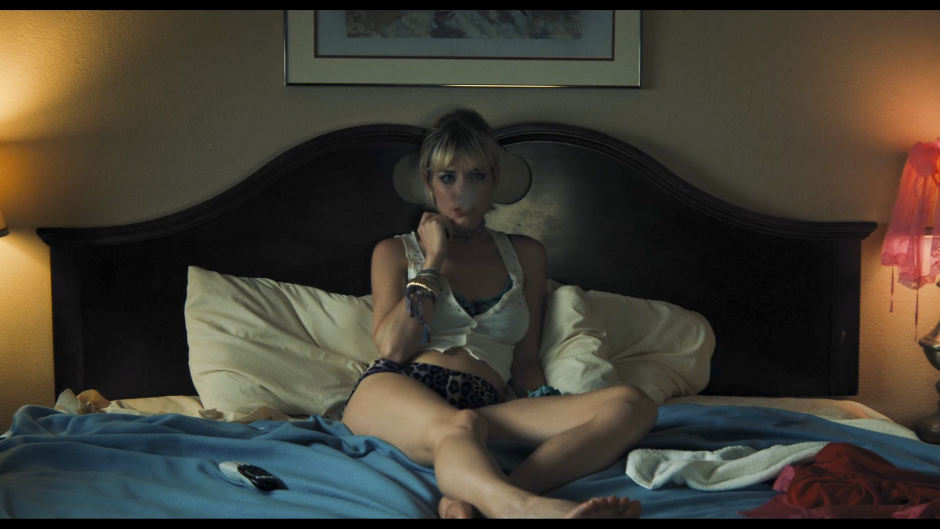
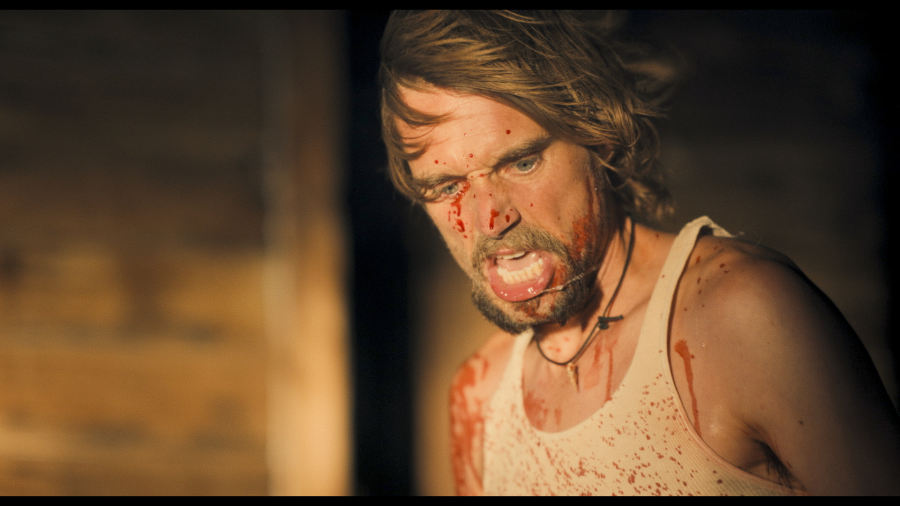
Phoning home, he leaves a voice mail for his wife saying what he had been shooting, adding that for a change he took a portrait of a local, and that perhaps one of his problems is he usually focuses so much on landscapes, not people. Unfortunately, he’s not going to get much time to see if he can modify his approach to life and his work, because he encounters Renny (Zachary Ray Sherman) and Susie Q (Ashley Smith), who are in the motel room next to his. An encounter leads to them inviting themselves into his room, and right from the start, you know this is not going to go well. Smith gives Susie a constantly amused but dangerous look, like a cat playing with a mouse who doesn’t even realise it’s in any peril, while Sherman’s Renny just drips menace, all skinny, wiry muscle, greasy hair, dangerous eyes, radiating a look that is like a mix of young Ethan Hawke crossed with Charles Manson.
Minor Spoiler Alert: this next part happens fairly early on in the film, and is integral to the later events, but you may not want to know before seeing it, as it involves something happening to a major character.
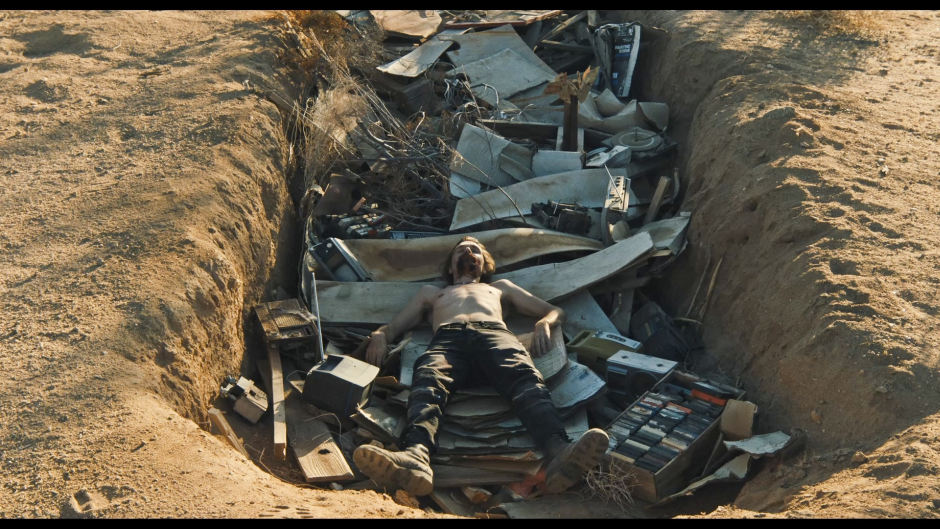
If you’re still with us after that spoiler warning, there’s a major shock as Renny, exuding a simultaneous mixture of chumminess and threat (some excellent acting by Sherman), takes Alex to an abandoned home he claims he was born in, that he may want to photograph, before suddenly turning ferociously violent, stabbing him again and again and again. The switch from almost laid-back, semi-stoner slouch to vicious murderer is a huge shock to the system, especially given the slow-burn pace of the film until then (it’s also a film that, especially in the first third, lets the cinematography do most of the talking, with very little dialogue). And of course, that’s part of the point, and damn, it is effective.
It also suddenly pulls you away from what you thought was one of the lead characters – now his wife becomes involved, hiring a private eye Harold Pallandino (David Yow), a man almost the epitome of the rumpled-suit, down on his luck Shamus. Despite his shabbiness, he does succeed in tracing Alex’s steps to the motel he took a room in, and several of the locations he visited, before giving into some of his own, old vices (the type, we learn from another detective, that got Harold kicked off the police force years before), leading Sam to head out to the desert to investigate for herself, but this will lead her into the very same danger her husband found himself in…
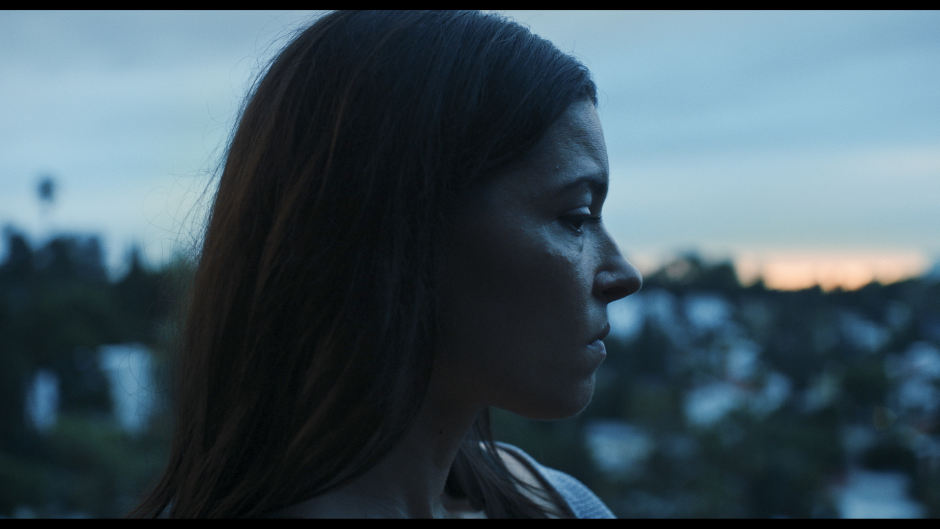
However, this neo-noir storyline, interesting as it is, is really only a part of the draw of A Desert – the visuals are as important here, and there is some gorgeous cinematography from Jay Keitel. As you’d expect, some of this takes the shape of the rich landscapes and colours the desert towns and their surroundings offer (and the contrast between the few human figures and that vast, beautiful but lonely landscape), but also the more mundane and worn parts of this world are made to look fascinating and beautiful here.
An abandoned cinema looks amazing, both visually intriguing but also echoing that melancholy of Alex, something that has seen better days but once had happy purpose, but retains a certain kind of beauty even in decay. Even a simple night shot, the camera gazing at the motel, the two rooms side by side, Alex in one, Renny and Susie in the adjoining one, a symmetrical pattern of doors and windows, both in their own rooms but watching the same film on TV, the flickering light creating identical patterns on their night-time windows. It’s only a moment, but it’s a beautiful shot and hints at the depth of care lavished by Erkman, Keitel and the rest of their crew on each frame of footage.
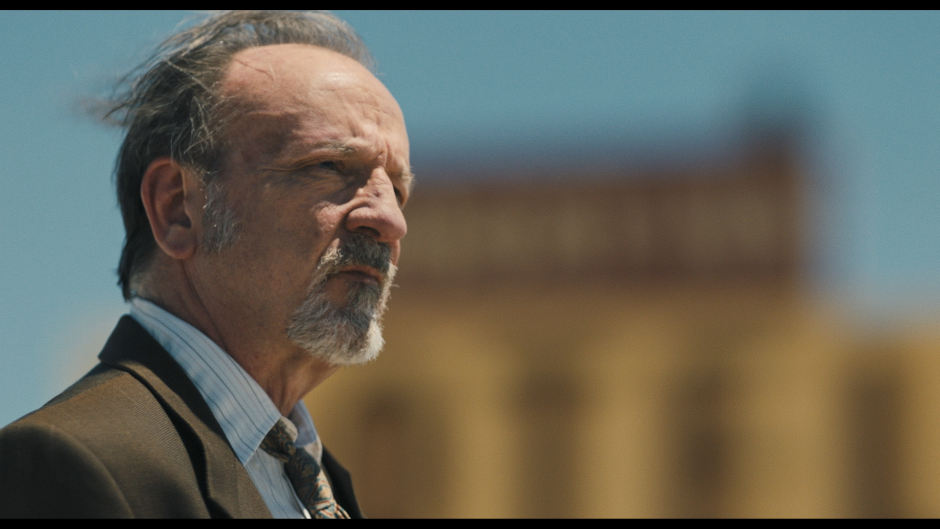
It’s a beautifully shot film that has echoes of some of those 80s and 90s American road movies, Indie films, with elements of noir, running on a slow-burn, low dialogue approach, which makes the sudden moments of action and violence all the more powerful.
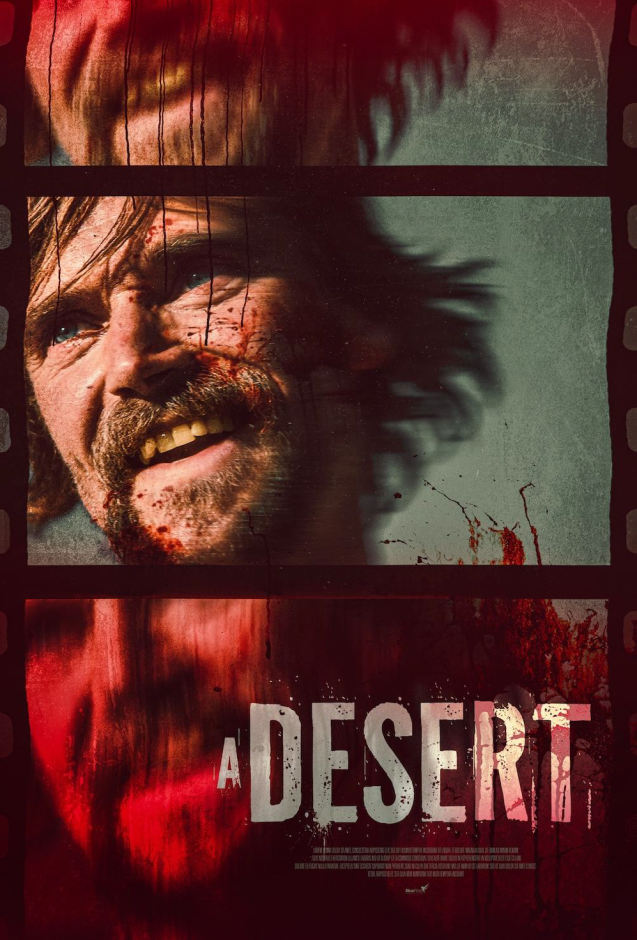
A Desert is available on UK and Irish digital platforms from Blue Finch Film Releasing, from November 24th.
Trailers
Support Live For Films
Follow Us




Advert
Recent Posts


Film Festivals and Conventions







Check out these other sites