EIFF 2025 Review: Mortician – “a quietly powerful piece of work.”
Directed by Abdolreza Kahani
Starring Nima Sadr, Rahim Bahrami, Erfan Bokaei, Gola, Srwa Hassani, Hamidreza Hosseini, Kimia Motevalli
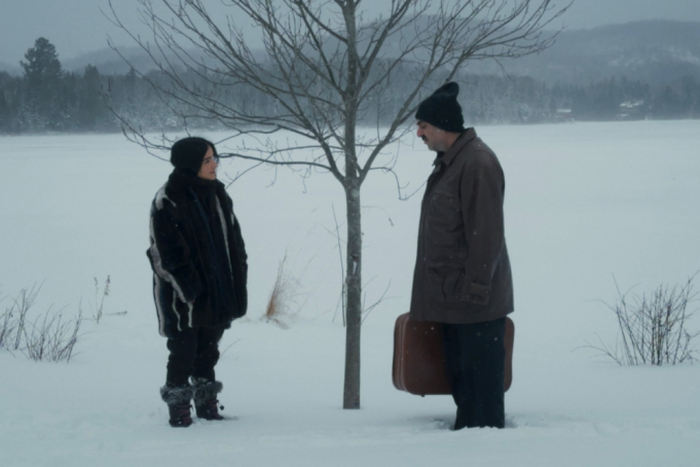
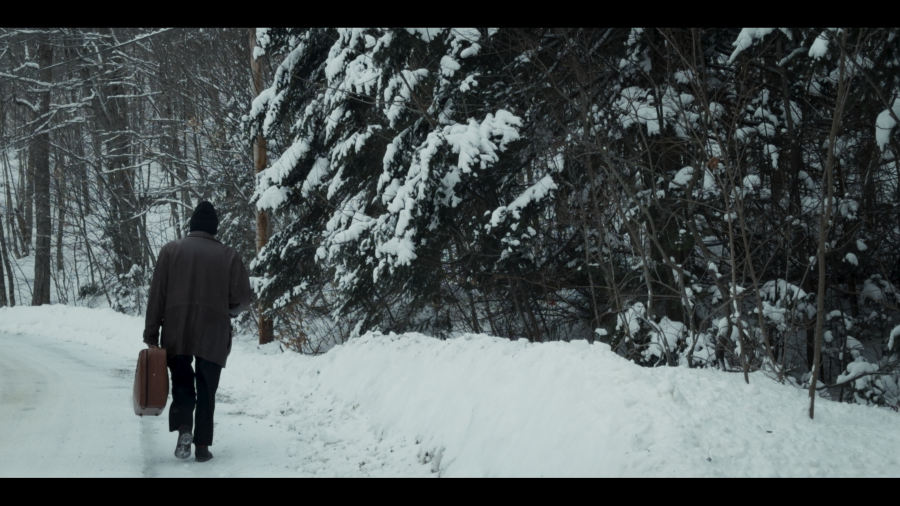
Mojtaba (Nima Sadr, who previously worked with Kahani on A Shrine), is the titular Mortician – an Iranian living and working in Canada to send money back home to his struggling family in Iran. He specialises in the important ritual of the washing of the body before an Islamic funeral, Mojtaba is a quiet, self-contained man, who criss-crosses Canada from city to snowbound city (most of the film is shot in a wintery palette) to carry out his duties.
Distanced from his family, he’s alone other than a few loose friends, fellow Iranians, who have gotten to know him through his work to the Islamic community in Canada, and he lives out of a single suitcase, couch-surfing courtesy of these friends as he goes from job to job in different cities. He stops at the required times of day to observe his prayers, removing his shoes and kneeling on a small, special prayer rug created for travelling. He takes his work seriously and observes the religious rules, leaving those few who know him to be somewhat bemused (asking him why not relax, have a drink, live a little, you’re not in Iran now), but he considers his observances to be a part of his work.
We follow this distanced life of Mojtaba, respected for his work by the community, but alone, no place to settle down in Canada, and far from his real home and family in Iran, going to some of his fellow Iranians with businesses in Canada to arrange to send most of his wages back home, keeping little for himself. When the boss of his company tells him they are closing down, he needs more work – he can’t earn the same money back home. And this is what eventually brings him into the orbit of Jana.
Jana is a famous singer and activist, played by real-life singer Gola, who somewhat scandalises Mojtaba by telling him she wants him to wash her corpse after she is dead. For starters, he protests, it should be a woman who does this, second she is young, how can she be about to die? And why did she contact him so many times before meeting, using a variety of different phone numbers, then meet in the middle of nowhere?
So cut off from the wider popular culture, he has no idea who she is, but his friends tell him, and that with a loud voice and many social media followers, Jana doesn’t just make art, she makes art criticising the repression of the people by the authoritarian regime in Iran, and this, of course, means she has to be careful who she meets, because she is a large, visible thorn in their side, even here in a distant land. She has decided that she will kill herself – not because she is suicidal, but as a protest against that brutal regime, to draw attention to her message and the plight of regular Iranians under the regime’s steel claws, and she wants him to help her film a series of videos to be released post-mortem, as well as performing the rites on her corpse.

Of course, Jana’s creation of art to draw attention to the brutal repression of the regime mirrors the work of the director himself, as Kahani’s work here is, as he told the festival audience, fictional, but drawn on real events. He, Gola and Sadr are all too sadly familiar with the methods of this regime, how they can still reach out to threaten dissidents and protestors even in distant lands using agents, or to control them by threatening family members still in Iran. It was clear this wasn’t just making a statement, this is heartfelt, born from desperate experience, and all involved almost certainly help draw a target on their own backs with their work, and yet they do it then take it to the world audience.
It’s a quietly powerful piece of work, for its message, for its slow but fascinating two-hander between Jana and Mojtaba, two very different people, but also interesting to anyone who loves the film medium for its approach. Kahani told the audience how he worked with a tiny crew, shooting on phones, often using quite static talking head scenes, and how this frees him up as a film-maker. While not the only film by an means to be shot on a phone, his methods feel more measured than some others who have tried similar approaches, there’s a feeling of pushing the envelope of how to make a film. This even extends to the credits – Kahani told us he doesn’t like the regular credits on movies, so his are more like an epilogue, talking about some of the making of the film.

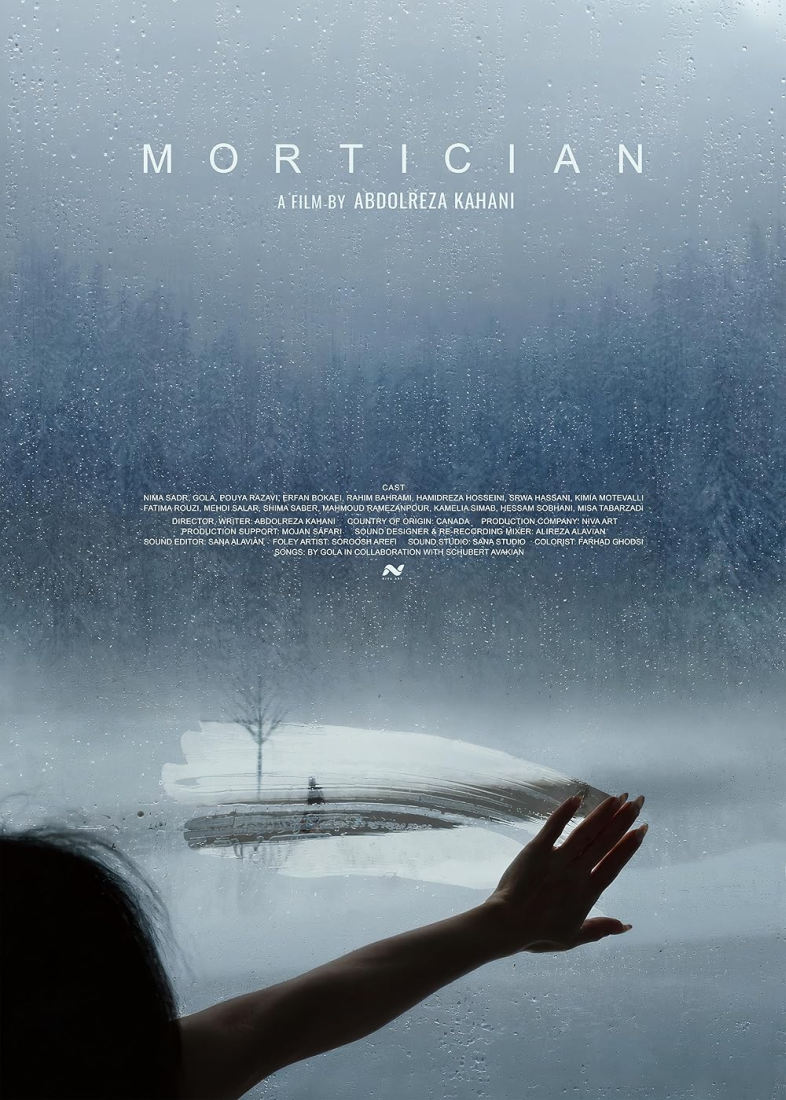
As the 78th Edinburgh International Film Festival drew to a close, the winners of the films in competition were announced: the Sean Connery Prize for Feature Filmmaking Excellence, funded by the Connery Foundation, with a significant prize of £50, 000 towards future work, was announced, and went to Kahani for Mortician. Rather nicely this award is decided by votes from the film festival’s audiences, not a panel of judges – it is the film lovers who paid for tickets and came out to the cinemas to see these films (some ten, feature-length movies in competition this year), the people who are supporting the festival and the artists, who cast the votes, and I rather like that.
Trailers
Support Live For Films
Follow Us




Advert
Recent Posts


Film Festivals and Conventions




Check out these other sites